
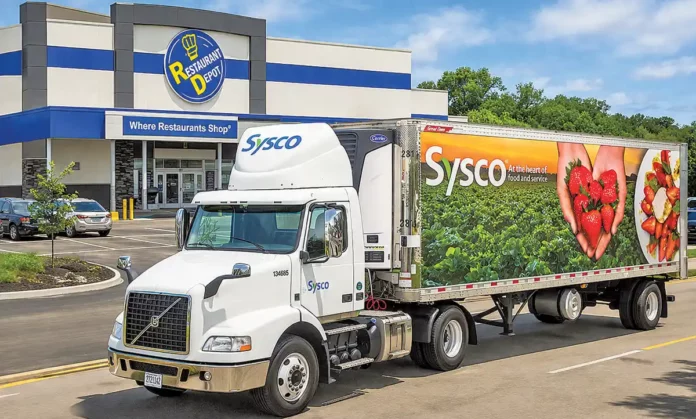
Sysco’s proposed $29.1 billion acquisition of Restaurant Depot would put the nation’s largest broadline distributor and its largest cash-and-carry wholesaler under single ownership. For food service management contractors managing institutional portfolios across dozens of sites, the time to build visibility and supply chain resilience is before the deal closes.
On March 30, 2026, Sysco Corporation announced a definitive agreement to acquire Jetro Holdings, the parent company of Restaurant Depot, in a deal valued at approximately $29.1 billion. The transaction awaits regulatory review and is not expected to close until Sysco’s fiscal third quarter of 2027. It may not close at all.
But the question institutional food service management contractors should be asking right now is not whether this deal will close. The question is what it reveals about the structural direction of foodservice distribution and what that direction requires of any FSMC managing procurement across a multi-site institutional portfolio.
Status as of May 4, 2026: Transaction announced. Regulatory review pending. Expected close fiscal Q3 2027. No formal FTC action taken as of this date.
What the Deal Actually Does

Sysco is the largest broadline foodservice distributor in the United States, with more than 700,000 customers across restaurants, educational institutions, healthcare facilities, hotels, and other institutional kitchens. Restaurant Depot is the largest cash-and-carry foodservice wholesaler in the country, operating more than 160 warehouse locations serving roughly 725,000 customers, primarily smaller independent operators.
These are not duplicate businesses. They are complementary channels that have historically constrained each other. The broadline model delivers to your door on a contract and schedule. The cash-and-carry model lets you walk in, see the price, pay wholesale, and load your own truck. For operators who use both, the cash-and-carry price has long served as a benchmark: a visible market rate against which broadline contracts could be evaluated and renegotiated.
Independent restaurant advocates have been direct about what consolidating those two channels under one owner means for their members. The Independent Restaurant Coalition called Restaurant Depot “the great equalizer,” a place where operators could access fair pricing without contracts or negotiating leverage, and said the acquisition would change the playing field in favor of the acquiring company.
Institutional FSMCs are not independent restaurants. But the logic applies. When fewer independent pricing mechanisms exist in a distribution market, the ability to know what ingredients actually cost across your portfolio, and to make procurement decisions based on that knowledge, becomes a competitive and financial necessity rather than a reporting convenience.
Why This Is Specifically an FSMC Problem
A food service management contractor managing accounts across K-12 schools, higher education, senior living, healthcare, and corrections is not running a single procurement operation. Every account has its own contractual commitments, nutritional standards, compliance requirements, and cost structure. The ingredient that drives margin compression at one account may be irrelevant at another. And the supply disruption that hits one region may take weeks to surface as a problem at a site in a different market.
This is the supply chain visibility gap that distribution consolidation makes more urgent. Without a clear view of ingredient cost exposure across the full portfolio, FSMCs are managing risk they cannot see. They are discovering supply problems when they reach the kitchen, not when they enter the supply chain. And they are making substitution decisions site-by-site rather than across the portfolio at once.
The compounding effect of market consolidation
Sysco’s proposed $250 million in annual cost synergies, to be realized within three years of closing, comes from combined procurement. That is a material signal about the direction of pricing power in the distribution market. Institutional procurement decisions made today, about distributor relationships, contract structures, and secondary supplier development, are being made in the context of a market that looks different in 2027 than it does now.
FSMCs that build portfolio-level ingredient visibility now, before the market changes, are building a capability that protects their institutional clients regardless of how the regulatory outcome plays out. If the deal is blocked, the capability is still valuable. If the deal closes, the capability becomes essential.
Tariff exposure compounds the same problem
The Sysco consolidation is not the only supply chain pressure on institutional procurement this year. Tariff volatility on imported ingredients has been creating cost spikes across commodity categories throughout 2025 and into 2026. For an FSMC managing hundreds of sites, knowing which sites have concentrated exposure to affected ingredient categories, and being able to plan substitutions before cost changes reach the serving line, is not a supply chain strategy. It is a basic operational requirement that most current systems are not built to provide.
Culinary Digital powers more than 2.5 million meals every day across institutional environments. The patterns visible at that scale, across commodity categories, geographic markets, and vertical segments, are patterns no single FSMC can generate from its own data alone.
What Visibility Actually Looks Like
Portfolio-level supply chain visibility for an FSMC is not a dashboard that shows what was ordered last week. It is the operational connection between what is happening in the distribution market and what is planned in the kitchen next week. It is the ability to see which ingredients across the portfolio are sourced from a single distributor, which sites are most exposed to a given commodity disruption, and what recipe substitutions exist before a shortage becomes a service failure.
CulinarySuite connects ingredient-level procurement data to menu planning and recipe management across every site in an FSMC’s portfolio. When a supply disruption is identified at the procurement layer, the substitution workflows are streamlined. Substitute products can be evaluated against nutritional requirements, USDA meal pattern compliance, and site-specific contract standards, not guessed at during a crisis.
The intelligence is in the connection between the data layers. Procurement, menu planning, recipe management, and production are not separate systems that get reconciled at month end. They are a single operational view that surfaces the cost and compliance implications of every supply change, in time to act on it.
The distribution market is consolidating. The operators who are building that kind of visibility now will be better positioned to protect their institutional clients, their contract margins, and their nutritional commitments than those who wait to see how the regulatory review turns out.
Frequently Asked Questions
How does the Sysco and Restaurant Depot deal affect institutional foodservice operators?
Sysco already serves educational institutions, healthcare facilities, and other institutional customers through scheduled delivery routes. Restaurant Depot has historically served as a cash-and-carry alternative that gave smaller operators a price benchmark against which they could evaluate and negotiate broadline distribution contracts. If the deal closes as proposed, that alternative channel comes under the same ownership as the largest broadline distributor. FSMCs managing multi-site institutional portfolios should evaluate their current distributor mix, assess which ingredient categories are most concentrated in Sysco-distributed lines, and build out secondary supplier relationships before the deal closes in fiscal 2027.
What is the current status of the Sysco and Restaurant Depot acquisition?
Sysco announced the definitive agreement to acquire Jetro Holdings, parent company of Restaurant Depot, on March 30, 2026, in a transaction valued at approximately $29.1 billion. The deal requires regulatory approval and is not expected to close until Sysco’s fiscal third quarter of 2027. The FTC has not yet formally acted on the deal, though advocacy groups including the Independent Restaurant Coalition and the American Economic Liberties Project have called on the agency to block it. Sysco’s prior attempt to acquire US Foods was blocked by the FTC in 2015.
What does ingredient cost visibility mean for an FSMC managing multiple institutional accounts?
Ingredient cost visibility means knowing, in real time, what a specific ingredient costs across your entire portfolio of sites and contracts, which sites have exposure to a given commodity, how a price change flows through to meal cost and reimbursement margins, and what substitution options exist if a primary supplier cannot deliver. In a consolidated distribution market, this kind of visibility becomes a competitive and financial necessity. FSMCs that can see their cost exposure across a portfolio, connect it to menu planning, and identify substitutions before a disruption reaches the kitchen are better positioned to protect contract margins and meet the nutritional standards their institutional clients require.


